
Data from Amfi shows that NAV of every one in two BAFs declined 1.5% or less on Monday compared to a 3.13% decline in Nifty 500.

'Despite the current uncertainties, the long-term outlook remains constructive due to strong fundamentals, government initiatives, and a stable banking sector.'

The Reserve Bank of India (RBI) on Wednesday issued a draft framework for alternative authentication mechanism for digital payments, wherein it has mandated that all digital payment transactions would have to be authenticated with an additional factor of authentication (AFA), except small value contactless card payments for up to Rs 5,000 at point of sale terminals, e-mandates for recurring transactions, and small value digital payments through offline mode, among others. Additionally, it has said that all digital payment transactions, other than card present transactions, have to ensure that one of the factors of authentication is dynamically created, i.e., the factor is generated after initiation of payment; is specific to the transaction; and cannot be reused.

Multi-asset allocation funds emerged as the most popular option for MFs as they provided the needed flexibility.

Commissions paid to mutual fund distributors (MFDs) increased by over 20 per cent for most large fund houses in 2023-24 (FY24), driven by a sharp market rally and strong inflows. The largest fund house, SBI Mutual Fund (MF), which now manages nearly Rs 10 trillion in assets, paid Rs 2,025 crore to its major distributors - 21 per cent higher than the Rs 1,675 crore payout in 2022-23 (FY23).

Overseas fundraising by Indian firms is experiencing a robust revival in 2024, following a lacklustre 2023. This resurgence is primarily driven by strong demand for high-yield bonds from international investors amid improving liquidity conditions and reduced hedging costs. Indian companies raised ~32,619 crore through overseas bonds in the first half of 2024, surpassing the total amount raised via such instruments in the entire 2023, which stood at ~31,218 crore, according to PRIME Database. In comparison, ~45,237 crore was raised in 2022 and ~1.05 trillion was secured in 2021.

While the minimum holding period for LTCG taxation has now been lowered, the tax outgo could be a bit higher under the new structure.

The possible instances of front running at Quant Mutual Fund have likely pushed the Securities and Exchange Board of India (Sebi) to expedite the implementation of an institutional mechanism framework designed to curb such market abuses. This framework, approved by the Sebi board in April, was slated to take effect six months after its notification. But, recent developments have set the wheels of regulation turning faster.

Public-sector banks, including Canara Bank and Bank of India, are tapping the infrastructure bond market. Canara Bank on Tuesday raised Rs 10,000 crore at a coupon rate of 7.40 per cent through 10-year infrastructure bonds. This comes after SBI on July 10 raised Rs 10,000 crore also through infrastructure bonds with a 15-year tenor at a coupon rate of 7.36 per cent.
Quant funds are a unique offering in the MF space as the investment decisions are driven by a blend of active and passive strategies.

'In an economy that is set to double in the coming years, stopping SIPs will take investors out of this growth path.'

A strong influx of 11 equity new fund offers (NFOs) in June, particularly within the thematic space, helped mutual funds collect Rs 14,370 crore - the highest ever via such introductory offers. This surpassed the previous high recorded in July 2021, where four NFOs accumulated Rs 13,709 crore, with ICICI Prudential MF's flexicap NFO alone mobilising Rs 9,808 crore.

Major credit issuers, including the largest - HDFC Bank - have integrated their systems with the Bharat Bill Payment Systems (BBPS) for receiving credit card repayments via third-party applications.
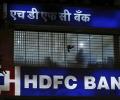
As many as 140 million customers of HDFC Bank and Axis Bank are expected to face interruption in banking services in the weekend due to the former's system upgrade and the transition of Citi India business to the latter. Both the banks have notified their customers about the interruption in services. HDFC Bank - the country's largest private sector lender with 93.2 million customers - had announced that it will undertake a system upgrade on July 13, wherein it will migrate its core banking system (CBS) to a new engineered platform to enhance customer experience.

Despite steady loan growth, the banking sector is expected to report subdued margins in the quarter ending June 2024 (Q1FY25), driven by high demand for deposits amidst tight liquidity conditions. However, according to Bloomberg analysts, listed banks are forecasted to see a 14.5 per cent year-on-year (Y-o-Y) increase in net profit. Estimates showed that banks' net interest income (NII), and revenues from interest minus interest expenses might grow 11.9 per cent Y-o-Y.

'Barring a temporary blip where stocks fell on verdict day, we are back to all-time highs.'

Cases of front-running mostly happen when large asset managers and intermediaries are involved in bulk trades as their transaction size is generally big enough to impact the stock price.

'Indian investors have always been debt-heavy but with growing financial awareness they are getting comfortable with equities.'

Midcap stocks Hero MotoCorp, Zydus Lifesciences, JSW Energy, NHPC, Bharat Heavy Electricals, Bosch, and Samvardhana Motherson are expected to earn upgrades.

Active equity mutual fund schemes have improved their showing across key categories over the past three months vis-a-vis their benchmarks.
